
The Blue Light

This is the second in a series of essays from my recent backpacking trip through Colorado’s Weminuche Wilderness. By day three, I was cold, tired, and beginning to wonder if I still had it in me. But I kept walking. And as often happens when I spend enough time alone in the mountains, my mind started going places I didn’t expect.
Another cold night. Frozen water bottle. Restless sleep.
Sleep? Did that happen at all? I’m not sure.
I can’t get comfortable in this mummy bag. I’m a stomach sleeper, which doesn’t work particularly well when you’re wrapped like a burrito. Do I need to train for this at home? Start sleeping on my back? Side sleeping, perhaps? But then there’s the cold. I just can’t seem to stay warm enough. Dammit.
My first thought this morning is that I’ll pack it out today. I can’t do another night of this.
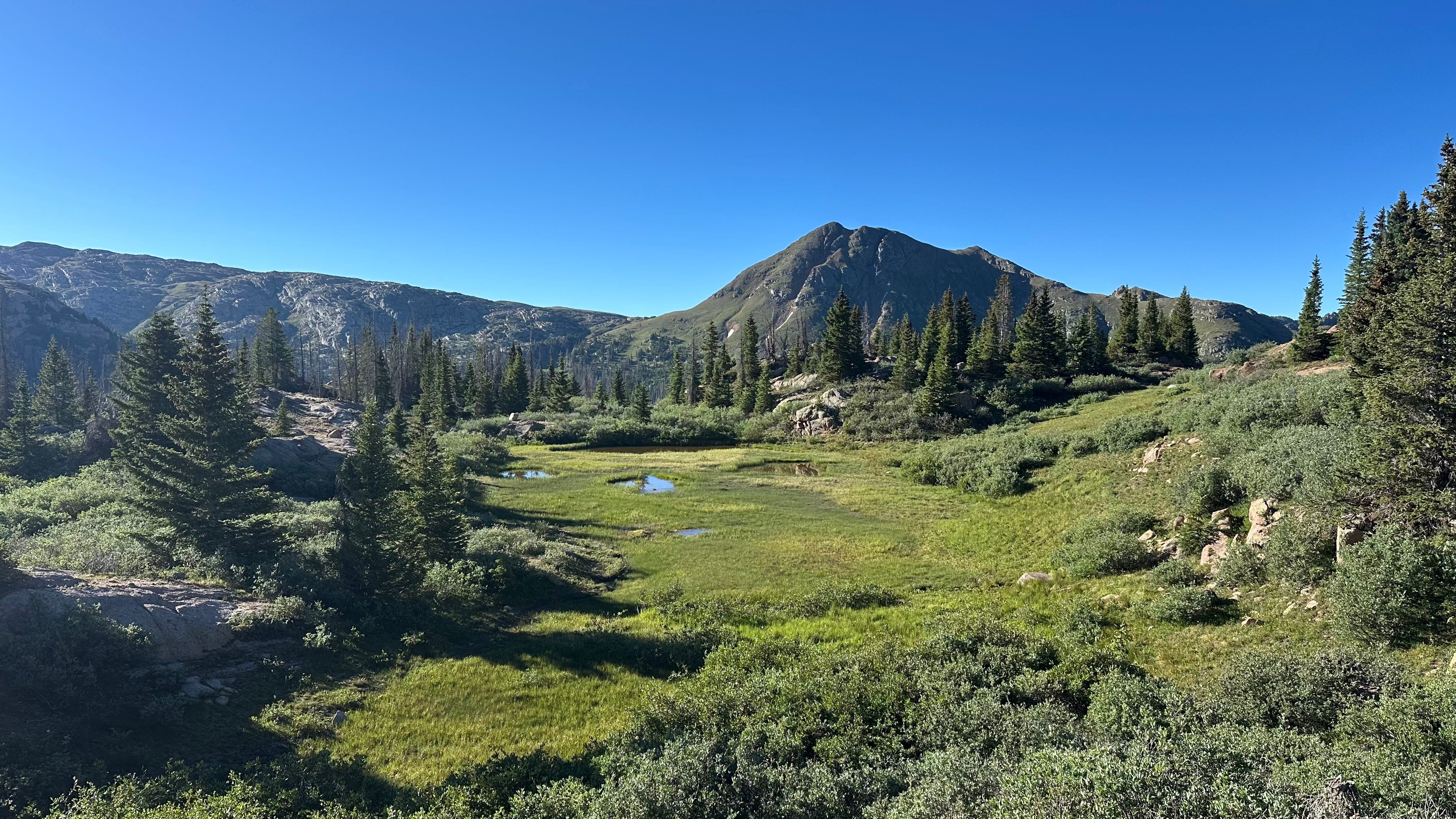
But then... coffee, sunshine, blissful stillness.
The wind on this trip has been unrelenting. It’s hard to escape it when you’re wandering around at twelve and thirteen thousand feet. Most of yesterday I wore my parka, fleece hat, and gloves. These rare moments of stillness feel decadent. The sun is warming my face. The trees aren’t moving. It looks like it’s going to be a beautiful day.
As usual, I’ll choose not to decide. I’ll see how it goes. Perhaps I’ll spend another night out here if it feels right.
Yesterday was brutal. And fantastically beautiful. I hiked over Trimble Pass and into another level of alpine terrain. The wind was unrelenting. At times, I was afraid. The whole thing was nerve-racking. I thought I might actually get blown off the mountain.
It felt like I was walking on the surface of the moon, far above treeline, with massive walls of granite rising all around me. Nothing but rock and sky. Nowhere to hide. Nowhere to find shelter. Just me, my backpack, and a fantastic windstorm.
My legs were already shaking from exhaustion when I finally turned around. I couldn’t see anywhere to camp, potentially for miles. So I leaned back into the wind and climbed the scree toward the pass, retracing miles of trail until I finally found the place where I’m sitting now.
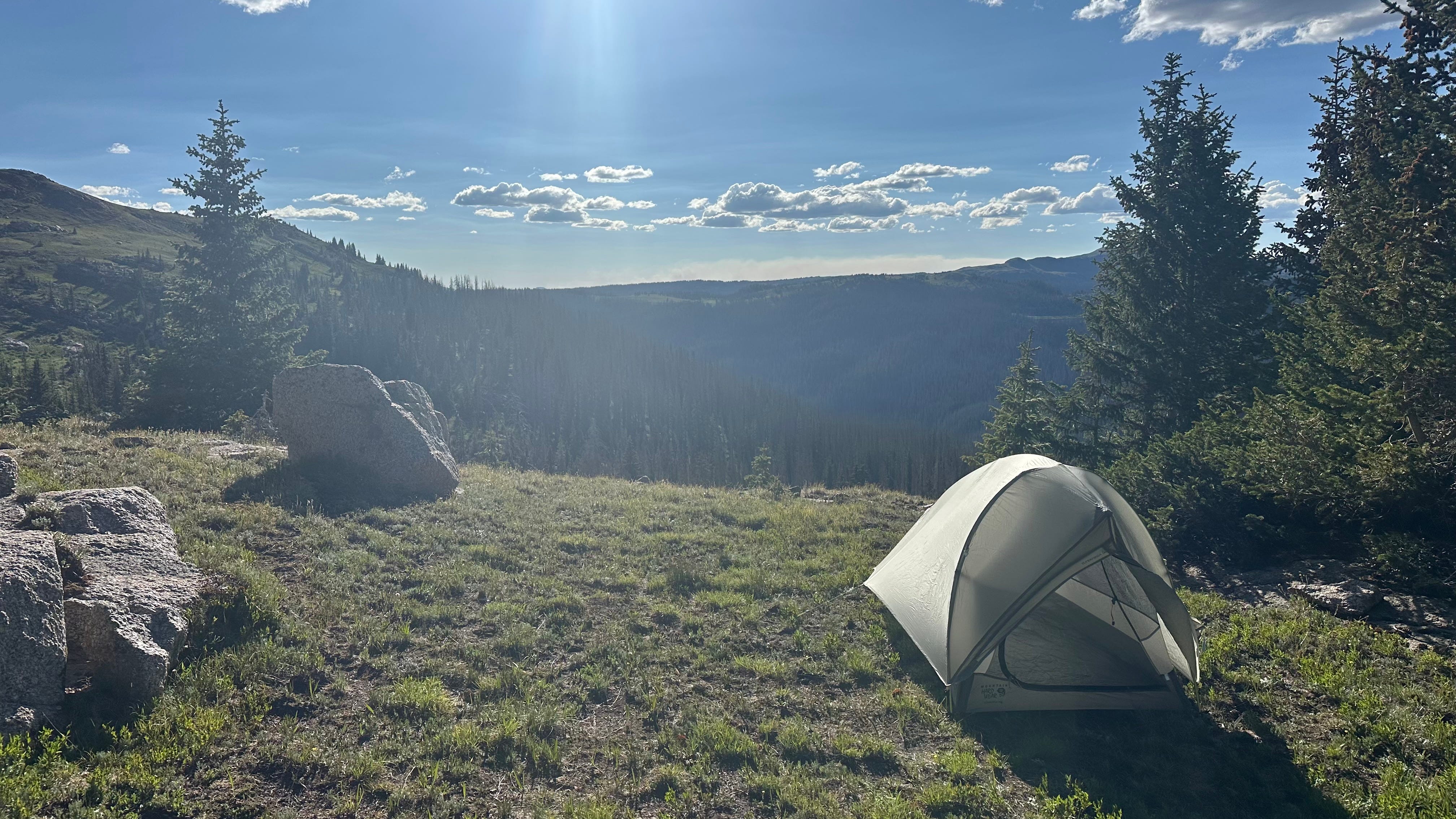
Finding shelter from the wind at this elevation isn’t easy. Yet here was this tiny meadow, neatly tucked among a few perfectly positioned boulders. The air was almost still. Through the trees I could see the surrounding mountains.
Perfect.
It’s 40°, but it feels like summer. The sun is brilliant, with so little atmosphere between me and its warmth. Step into the shade and it feels like winter again. I find the contrast fascinating.
There are so many wildflowers that I can’t avoid stepping on them. I try, weaving around patches of yellow and purple, but eventually there’s nowhere else to put my feet.
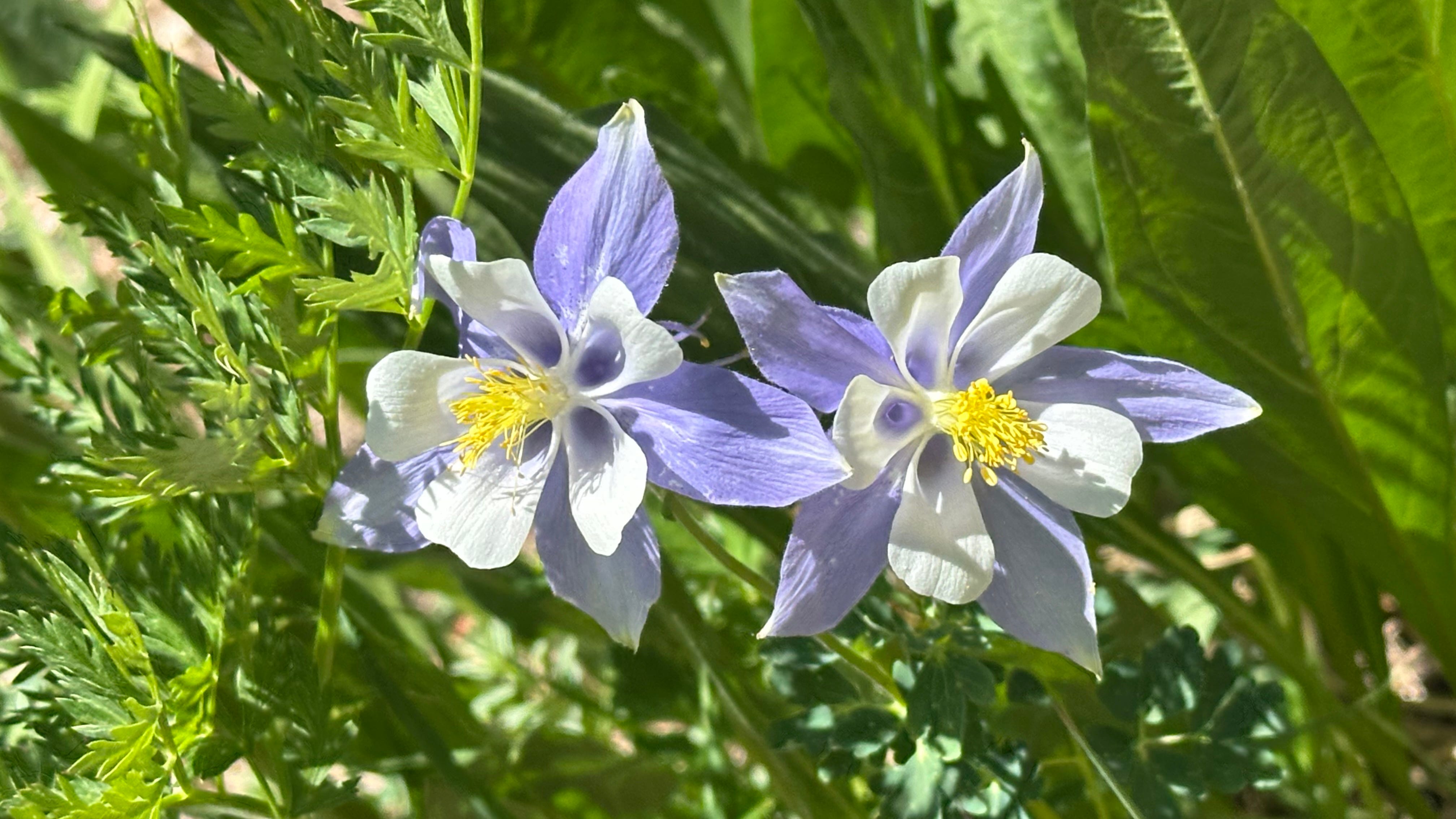
Does the rest of nature worry about such things?
How many flowers does a herd of elk crush when they bed down for the night? Does the elk care? Is this instinct toward preservation particular to humans? Perhaps because we’re capable of destroying so much, we’ve also developed the ability to worry about what we destroy.
But why?
Why did nature create us this way?
I look around and see symbiotic relationships everywhere. Flowers feeding insects. Insects pollinating flowers. Animals spreading seeds. Grass feeding elk. Death feeding soil. Everything becoming something else.
Are humans creating relationships like these? I’m sure we are, but from where I’m sitting, they’re harder to see.
The rest of nature does not seem to care about preservation. It just happens naturally. How did we become so out of balance with that?
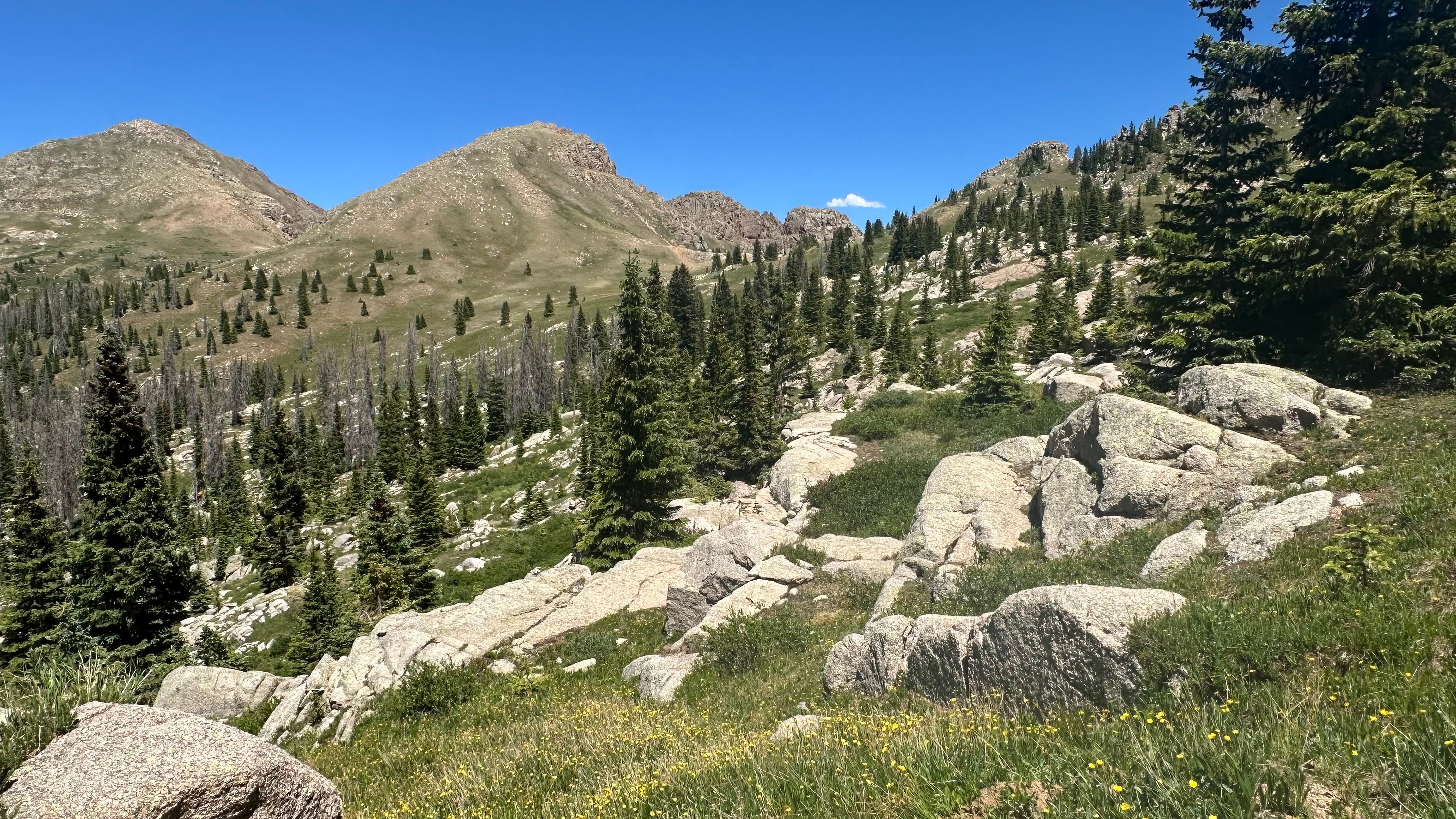
The perfection up here is astounding. Of course, the pine beetles have severely damaged the lodgepole pines. Dead trees stand gray among the living. And yet the spruce trees are healthy and vibrant, filling in the spaces left behind.
Change.
That’s the word humans don’t like.
And yet we’re the ones inflicting enormous change upon the Earth.
What I find interesting is that we care about this. Does the pine beetle care that it’s killing the lodgepoles? Does it understand that acres of dead forest causes fires to spread throughout the American West, changing the landscape for decades?
I think we know the answer.
Nature seems to work through selfishness. The bee doesn’t pollinate a flower because it cares about the future of flowers. The bird doesn’t spread seeds because it’s concerned about forest regeneration. The grass doesn’t grow because it wants to feed the elk.
They simply do what they do.
And somehow, from all those seemingly selfish individual acts, the whole thing works.
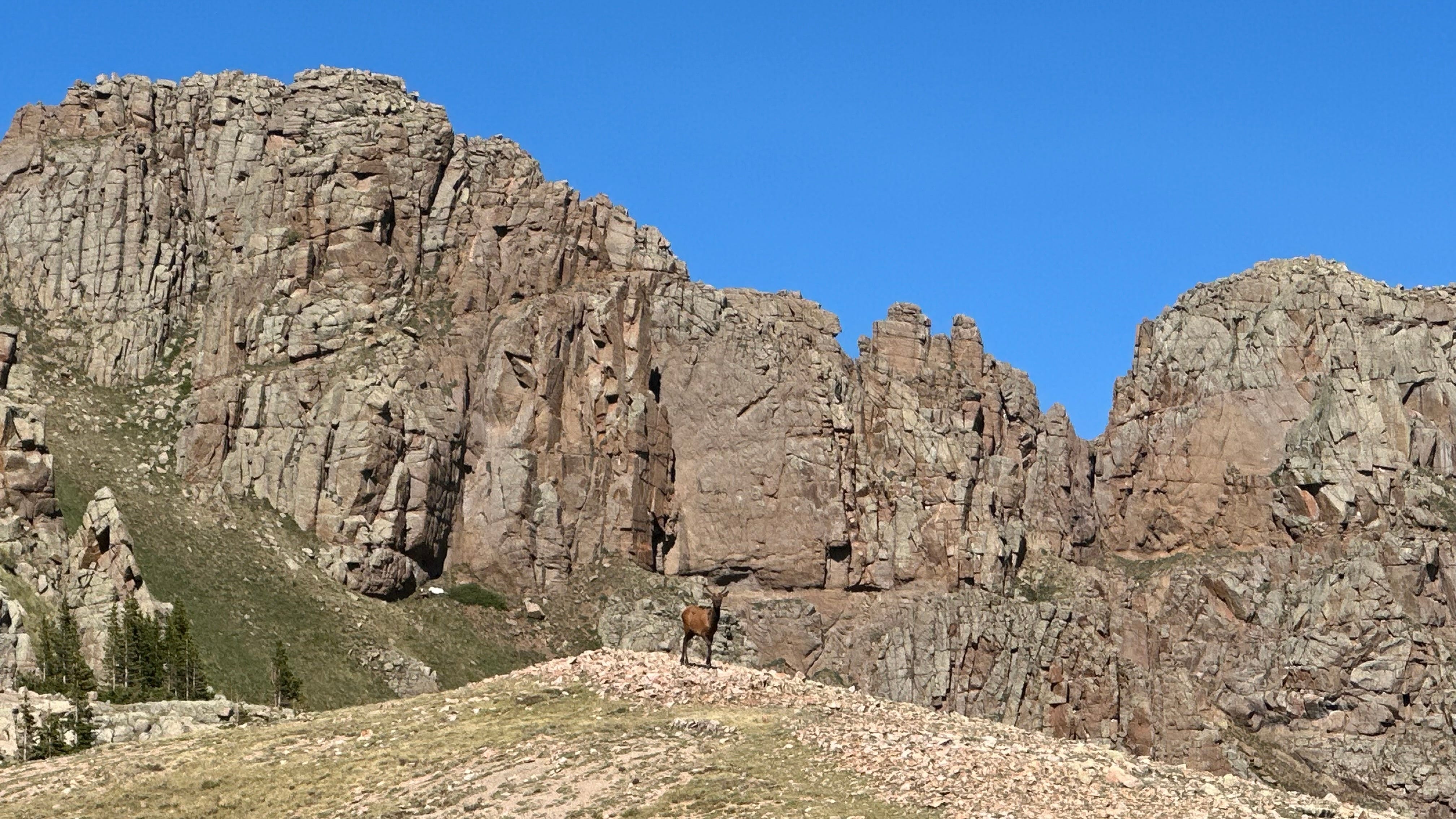
But we care.
Our brains have the capacity to ponder such things. Not only are we destroying the Earth, but we know it.
So the larger question is: why?
If nature created all these relationships, why did it create us?
Are we some kind of anomaly? A mutant branch on the evolutionary tree? Or are we simply another temporary imbalance that will eventually work itself out, like the pine beetle?
Or... is all of our perceived destruction part of a much larger plan that we simply cannot see?
Did all these intricate relationships simply happen? Is there some larger intelligence at work? God, perhaps. But certainly not a human God. Not a man, or a woman, or an animal. But an energy. A force.
I’ve come to think of it as the blue light.
I’ve seen it many times. I first sensed it on my early backpacking trips. Years later, I encountered it during psychedelic experiences with psilocybin. I’ve seen it during Kundalini yoga. During breathwork. Different circumstances, different states of mind, yet they all seem to point toward the same blue light.
A glimpse behind the veil.
The cheat code, as I like to call it. Because you can glimpse it, but you can’t bring it back with you. You can’t put it in your pocket or explain it properly over dinner. You return with little more than the feeling that there is something there.
Out here in the wilderness, I feel it again.
The blue light.
After 52 years, I’ve stopped feeling the need to explain it. I don’t know exactly what it is. I only know that I’ve experienced it enough times that I no longer dismiss it.
Humans have such a need to prove things. We want evidence. Explanations. Physical proof. And there’s value in that. Science has given us extraordinary ways of understanding the world.
But I wonder if our fear of looking foolish also keeps us from asking the most important questions. No one wants to look like a quack. So we stay safely inside the boundaries of what can already be explained.
Out here, those boundaries seem less important.
If you really want to question what the hell is going on, come to the mountains.
What are we? Really? Why do we exist? What purpose do we serve? To save the Earth? To save ourselves? Sounds like insanity if you ask me. To suggest that our very existence is the thing we are trying to save ourselves from.
But what could be truer?
If we are the problem, who created us? Who’s to blame for our existence? Are our lives meaningless and destructive to the greater good?
Are we villains?
Building. Consuming. Creating. Destroying. Loving the Earth while simultaneously dissecting it.
Are humans out of balance? Is the pine beetle out of balance?
Perhaps that’s the underlying question beneath all the others. The one we keep circling throughout our lives, whether we’re sitting in churches, laboratories, therapists’ offices, or alone at twelve thousand feet staring at wildflowers.
Who’s to say?
The sun has climbed higher now. My water is beginning to thaw. Somewhere across the meadow, a marmot whistles from the rocks. The wind has started moving through the trees again.
I shoulder my pack and keep walking.
If you enjoy my nature writing, please check out my books at scottstillmanblog.com. Your support allows me to keep doing these adventures. Thank you for following along.
-Scott
I have pondered a lot of this many times. Some days I think Zapfe was right and our consciousness was an evolutionary mistake that is in the process of correcting itself ( via our impending destruction by mother nature,) other days I think consciousness is the origin point of everything and we are just little nodes of self awareness in a sea of conscience experience that operates via rules we still barely understand. Lately I am choosing to believe the latter because the nihilism it induces to think all of human civilization was just a tragic accident makes it hard to get out of bed in the morning. The zen buddhists at least have a narrative that gives me hope that our species can still improve over time. I have seen and felt the unity of everything on psychedelics as well. If that was simply a hallucination, I would rather live my life honoring the peace of that experience than losing faith in literally everything. What is undeniable is my perspective on the world has a radical impact on the actual way that I experience it, so I try really hard to keep my perspective positive because I already know how much it sucks to be a pessimist and I don't hate myself enough to ever harm my reality like that again.
Thanks for taking me along with you on your trek through the mountains :-)